

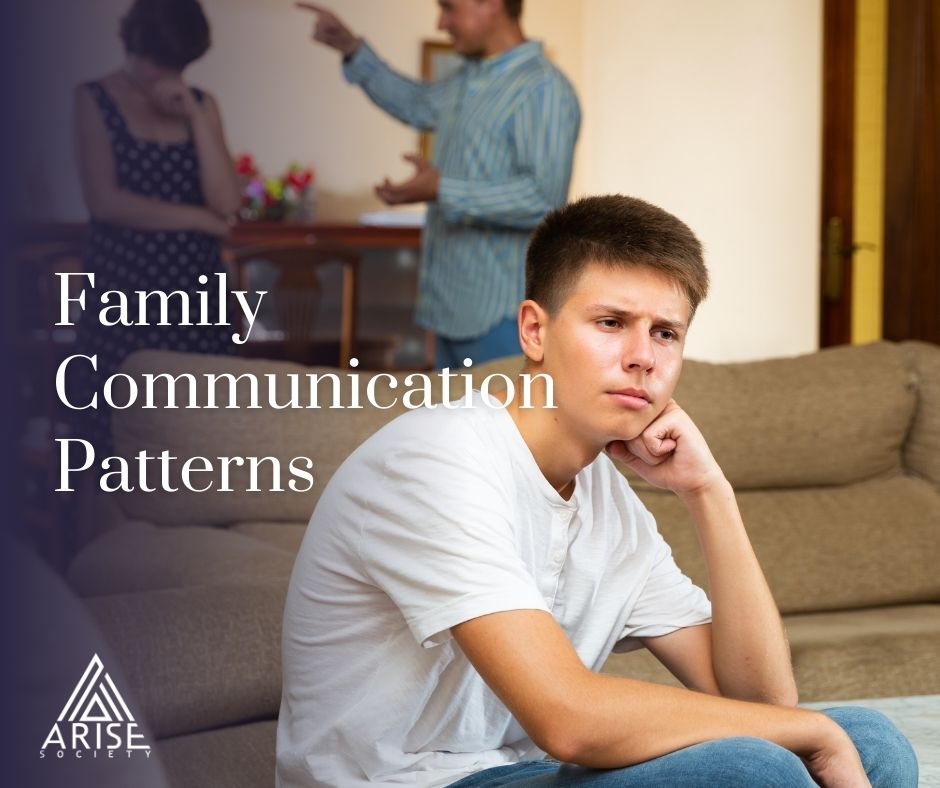
 When 22-year-old Alex started therapy, his counselor asked about his family. “We’re fine,” he said. “We just don’t talk much.” What Alex didn’t realize was that “we just don’t talk much” wasn’t a neutral fact about his family, it was the key to understanding why he struggled to maintain friendships, why romantic relationships felt impossible, and why he’d been living in his childhood bedroom for two years after dropping out of college.
Every family has a communication pattern, a unique “language” of connection that shapes how members interact, express needs, handle conflict, and show love. These patterns are so fundamental that most people don’t recognize them as patterns at all. They just feel like “how things are” or “how people act.” But research shows these family communication patterns profoundly influence everything from your mental health to your career success to your ability to build satisfying relationships.
This guide will help you understand your family’s communication pattern, recognize how it shows up in your adult life, and learn how to develop new patterns when the old ones no longer serve you.
What Are Family Communication Patterns?
 Family communication patterns are the stable, predictable ways families exchange information and interact with each other. They’re the unwritten rules about who talks, when they talk, what topics are acceptable, how emotions are expressed, and how conflicts are resolved.
Research analyzing over 19,745 participants found that these patterns have meaningful associations with cognitive activities, relational behaviors, and individual wellbeing. More strikingly, studies show these patterns transmit across generations. The way your grandparents communicated influenced how your parents communicate, which now influences how you communicate.
Family communication patterns break down into two main dimensions:
1. Conversation Orientation
Families high in conversation orientation encourage open, frequent communication about a wide range of topics. These families:
- Share thoughts and feelings freely
- Make decisions together through discussion
- Value everyone’s input regardless of age or status
- Spend time talking about both trivial and important matters
- Create environments where questioning and debate are welcome
Families low in conversation orientation restrict communication to necessary exchanges. These families:
- Talk primarily about logistics and practical matters
- Keep feelings and thoughts private
- Value action over discussion
- May see talking as unnecessary or indulgent
- Handle problems individually rather than discussing them
2. Conformity Orientation
Families high in conformity orientation emphasize agreement, obedience to authority, and family harmony. These families:
- Expect children to follow parental decisions without argument
- Value family unity over individual preferences
- Avoid conflict in favor of keeping peace
- Have clear hierarchies and respect for authority
- Emphasize family loyalty and tradition
Families low in conformity orientation encourage independence and individual expression. These families:
- Support individual decision-making
- Value personal growth over family cohesion
- Accept disagreement and different viewpoints
- Encourage questioning of rules and norms
- Promote autonomy and self-direction
The Four Family Communication Types
When you combine conversation and conformity orientations, you get four distinct family types:
| Family Type | Communication Style | Strengths | Potential Challenges for Young Adults |
|---|---|---|---|
| Consensual (High Conversation, High Conformity) |
Lots of discussion but parents make final decisions. Open communication within boundaries of family values. | Balance of connection and structure. Children feel heard even when they don’t get their way. | May struggle with full autonomy. Seek approval from authority figures. Difficulty making decisions independently. |
| Pluralistic (High Conversation, Low Conformity) |
Open, unconstrained communication. Everyone’s opinion matters equally. Decisions made collaboratively. | Strong communication skills. Comfortable with complexity and different viewpoints. High emotional intelligence. | May struggle with hierarchy in workplace. Can be indecisive. May have difficulty accepting “no” for an answer. |
| Protective (Low Conversation, High Conformity) |
Limited discussion. Parents decide, children obey. Emphasis on family loyalty and traditional values. | Clear expectations and structure. Strong family bonds through shared identity. | Poor communication skills. Difficulty expressing needs. May rebel against all authority or submit too easily. Struggle with independence. |
| Laissez-Faire (Low Conversation, Low Conformity) |
Little communication or guidance. Family members operate independently with minimal interaction. | Early independence. Self-reliance. Ability to function autonomously. | Emotional disconnection. Poor social skills. May avoid intimacy. Difficulty asking for or accepting help. Feelings of isolation. |
Research shows that sibling closeness was highest in families that emphasized both conversation and conformity (Consensual) and lowest in families that emphasized only conversation or neither (Pluralistic or Laissez-Faire). This suggests that balanced communication, where both open dialogue and family cohesion exist, creates the strongest foundation for relationships.
How Your Family’s Pattern Shows Up in Your Adult Life
The communication pattern you learned at home becomes your default approach to all relationships. Understanding how your childhood bids shape adult relationships reveals why certain social situations feel natural while others feel impossible.
If You’re From a High Conversation Family:
You likely:
- Process thoughts and feelings by talking them through
- Expect others to share openly and be confused when they don’t
- View silence or withholding as problematic or hostile
- Feel comfortable with emotional expression and vulnerability
- May overwhelm people from low conversation backgrounds
Challenges you might face:
- Professional settings where brevity is valued over thorough discussion
- Relationships with partners who need more processing time before talking
- Cultures or contexts where directness is seen as rude or aggressive
- Respecting others’ need for privacy or space
If You’re From a Low Conversation Family:
You likely:
- Keep thoughts and feelings private unless specifically asked
- Feel uncomfortable with emotional discussions
- Process internally rather than by talking
- View talking as unnecessary when action is possible
- May use withdrawal as your primary communication strategy
Challenges you might face:
- Romantic partners who need verbal reassurance and connection
- Friendships that require emotional sharing and vulnerability
- Workplace environments that value collaboration and discussion
- Asking directly for what you need rather than expecting others to notice
This withdrawal pattern is particularly common and problematic for young adults. Silent bids and withdrawal as a connection strategy often backfire spectacularly, creating isolation when what you actually want is connection.
If You’re From a High Conformity Family:
You likely:
- Respect authority and hierarchy
- Value family loyalty and tradition highly
- Feel uncomfortable with conflict or disagreement
- Seek consensus and harmony in relationships
- May struggle to assert your own needs when they conflict with others’
Challenges you might face:
- Setting boundaries with family members
- Making decisions that disappoint others
- Environments that reward independence and risk-taking
- Speaking up when you disagree with authority figures
If You’re From a Low Conformity Family:
You likely:
- Value independence and individual expression
- Question rules and authority naturally
- Feel comfortable making your own decisions
- May struggle with compromise or considering others’ needs
- View asking for help as weakness
Challenges you might face:
- Workplace hierarchies and “paying your dues”
- Relationships that require compromise and sacrifice
- Following rules that seem arbitrary
- Accepting that others’ needs matter as much as your own
The Hidden Languages Families Speak
Beyond these broad patterns, every family develops specific “languages” of connection. These are the unique ways your family expressed love, handled conflict, and sought attention.
Common Family Languages:
| Family Language | What It Looks Like at Home | How It Translates to Adult Life |
|---|---|---|
| Silence as Communication | Withdrawal signals displeasure. Silent treatment as punishment. Quiet means upset. | You withdraw when hurt, expecting others to notice and pursue you. Often backfires as others interpret your silence as needing space. |
| Acts of Service | Love shown through cooking, fixing things, running errands. “I love you” means “let me help you.” | You show care by doing things for others but struggle with verbal affection. Partners may not recognize your love language. |
| Indirect Requests | Hints and suggestions instead of direct asks. “I wish someone would…” rather than “Please do this.” | You expect others to read your mind. Feel hurt when needs aren’t met despite never stating them clearly. |
| Achievement as Worth | Affection and attention tied to accomplishments. Pride expressed for grades, awards, success. | You equate your value with productivity. Struggle with unconditional self-worth. May overwork or people-please. |
| Conflict Avoidance | Problems swept under the rug. “Keep the peace” at all costs. Anger is scary or shameful. | You avoid necessary conflicts, letting resentment build. May use passive-aggressive communication. Terrified of confrontation. |
| Loud Emotional Expression | Big feelings expressed dramatically. Yelling is normal. High emotional intensity. | Your emotional expression feels appropriate to you but overwhelming to others. May be seen as volatile or unstable. |
When Family Patterns Become Problems
Family communication patterns aren’t inherently good or bad. They become problematic when:
1. They Don’t Translate Outside Your Family
The language that worked perfectly at home confuses or alienates others. You’re speaking one dialect, and the rest of the world speaks another. This mismatch creates constant social friction and misunderstanding.
2. They Reinforce Dysfunctional Behaviors
Some patterns actively prevent healthy adult functioning. Extreme conformity orientation c an create adults who can’t make independent decisions. Laissez-faire patterns can produce adults who struggle with intimacy and vulnerability.
3. They Limit Your Relationship Options
If you can only connect with people who speak your exact family language, you severely limit your relationship possibilities. You need the flexibility to adapt to different communication styles.
4. They Contribute to Failure to Launch
Research shows that approximately 25% of young adults aged 25-34 live in multigenerational households. Many struggle with independence precisely because their family communication patterns didn’t prepare them for the social skills necessary for autonomous living.
If you can’t communicate directly with employers, roommates, or romantic partners because your family pattern taught indirect communication or withdrawal, independence becomes extraordinarily difficult.
The Parent’s Role in Perpetuating or Changing Patterns
If you’re a parent reading this, you play a crucial role in either reinforcing problematic patterns or helping your young adult develop healthier ones. Understanding how to support without enabling is essential when your child is struggling.
How Parents Accidentally Reinforce Dysfunctional Patterns:
- Responding more to dysfunctional than healthy communication: If your child gets attention when they withdraw, manipulate, or create drama, but not when they communicate directly, you’re teaching them dysfunction works better.
- Accepting vague communication: When your child says they’re “fine” and you accept it rather than gently pushing for real communication, you reinforce indirect patterns.
- Modeling the problematic pattern yourself: If you use silent treatment, indirect requests, or conflict avoidance, your child learns these as normal and acceptable.
- Making it too comfortable to stay stuck: When you accommodate all your young adult’s needs without expecting them to communicate, negotiate, or problem-solve, you remove the motivation to develop better skills.
How Parents Can Support Healthier Patterns:
- Model direct, healthy communication yourself: Say what you mean, express your needs clearly, handle conflicts constructively. Your behavior teaches more than your words.
- Reward healthy communication attempts: When your young adult makes a direct request, turn toward it enthusiastically. When they express a feeling clearly, validate it. Make healthy communication work better than dysfunction.
- Create low-stakes practice opportunities: Regular family meals with phones away, one-on-one time focused on listening, collaborative projects that require communication.
- Set clear expectations around communication: “In this house, we use words to express our needs” or “Silent treatment isn’t acceptable here. If you need space, say so directly.”
- Gradually increase expectations: Start where your young adult is and slowly raise the bar. Don’t expect perfect communication immediately, but do expect progress.
Learning to Become “Bilingual”
The goal isn’t to completely abandon your family’s communication pattern. It’s to become bilingual, able to speak your family’s language when appropriate while also developing flexibility to communicate effectively in other contexts.
How to Develop Communication Flexibility:
Step 1: Identify Your Home Language
Answer these questions:
- What family type (Consensual, Pluralistic, Protective, or Laissez-Faire) best describes your family?
- How did your family handle conflict?
- How was affection expressed?
- What were the unspoken rules about emotional expression?
- How did you get attention when you needed it?
- What topics were off-limits?
Step 2: Notice Where It Doesn’t Work
Pay attention to situations where your natural communication style creates problems:
- When do people seem confused by your approach?
- What social situations feel most uncomfortable?
- When do your attempts at connection backfire?
- Where do you experience repeated relationship failures?
Step 3: Observe and Learn New Languages
Watch how others communicate in contexts where you struggle:
- How do they express needs directly?
- How do they handle conflict?
- How do they ask for help?
- How do they show affection?
- What makes their communication effective?
Step 4: Practice New Patterns in Safe Environments
Start small with low-stakes situations:
- Practice direct requests with close friends before trying with authority figures
- Experiment with more emotional expression in therapy before trying with family
- Try new conflict resolution approaches in structured settings
Step 5: Build Tolerance for Discomfort
New communication patterns will feel wrong at first. Your brain will tell you that being direct is rude, that expressing needs is selfish, that showing emotion is weakness. This discomfort is temporary. Keep practicing despite the discomfort.
When Professional Help Is Needed
Sometimes family communication patterns are so deeply entrenched that individual effort isn’t enough. Consider professional support when:
- You’ve tried to change your patterns for months without success
- Your family pattern is severely limiting your life (job loss, relationship failures, isolation)
- Anxiety or depression makes new communication attempts overwhelming
- You need a structured environment to practice new patterns
- Your family actively sabotages your attempts to communicate differently
Community-based programs provide ideal environments for learning new communication patterns because they:
- Create daily opportunities to practice different approaches
- Offer immediate feedback on communication attempts
- Model healthy patterns constantly through peer and facilitator interactions
- Provide safety to experiment without catastrophic consequences
- Build new “families” with healthier communication norms
Immersive programs for young adults specifically address family communication pattern issues, recognizing that many young adults need intensive, supportive environments to develop the skills their families didn’t teach.
The Bottom Line: Your Family’s Language Isn’t Your Destiny
The communication patterns you learned at home shaped who you are, but they don’t have to limit who you become. While you can’t change your family of origin, you can develop new skills that allow you to connect across different communication styles.
Understanding your family’s pattern isn’t about blame. Your parents communicated the way they did because it’s what they learned from their parents. The pattern served some purpose in your family system, even if it’s not serving you well now.
But understanding creates choice. Once you recognize your family’s communication pattern as just one language among many, you can consciously develop bilingual or even multilingual communication abilities. You can honor your family’s way of connecting while also developing the flexibility to connect with people who speak different languages.
This flexibility, the ability to recognize and adapt to different communication styles, is one of the most valuable skills you can develop. It enables deeper friendships, more satisfying romantic relationships, greater career success, and ultimately, a richer, more connected life.
The language your family spoke isn’t wrong. But it’s also not the only language worth speaking. By developing communication flexibility, you expand your world far beyond the walls of your childhood home.
Related Reading:
- The Hidden Language of Families: How Your Childhood Bids Shape Adult Relationships
- Silent Bids and Missed Connections: Understanding Withdrawal as a Connection Strategy
- The Parent’s Role: Supporting Your Young Adult’s Bid Transformation Without Enabling
Sources:
- Schrodt, P., Witt, P. L., & Messersmith, A. S. (2008). A meta-analytical review of family communication patterns and their associations with information processing, behavioral, and psychosocial outcomes. Communication Monographs, 75(3), 248-269.
- Koerner, A. F., & Fitzpatrick, M. A. (2002). Family Communication Patterns Theory. Communication Theory, 12(1), 70-91.
- Horstman, H. K., & Nelson, L. R. (2016). Sibling closeness and parents’ perceived bias in family discussions. Journal of Family Communication, 2(1), 133-152.
- Pew Research Center (2021). A majority of young adults in the U.S. live with their parents for the first time since the Great Depression.